


Dog can’t tolerate chicken – how to choose chicken-free dog food
Is your dog itchy, always licking its paws, prone to red ears, or does its stomach get upset on certain foods? One possible cause is a reaction to an ingredient in the food, such as chicken.
If your dog can’t tolerate chicken, choose a food with no chicken meat, chicken protein or chicken fat, and always read the full ingredient list to be sure, not just the name of the food. Chicken goes into a great many dog foods. It can turn up even in products whose packs put lamb, beef or fish on the front. A food can also be free of chicken meat but still contain chicken fat or poultry fat.
Below we explain how to spot chicken in an ingredient list, what to make of chicken fat, and which of our foods have no chicken and no chicken fat.
| The list contains | Examples | What to do |
|---|---|---|
| A chicken name | Chicken meat, chicken protein, chicken meal, hydrolysed chicken protein | Skip it for a dog sensitive to chicken |
| Chicken fat | Fat that may carry traces of chicken protein | Avoid it for a very sensitive dog |
| A general name | Poultry fat, poultry protein, animal fat, animal protein | Take care if the maker doesn’t say where it comes from |
| Another clear protein source | Lamb, fish, beef, pork, horse, insects | A good choice if the rest of the list has no chicken either |
Can a dog be allergic to chicken?
Yes. In a food allergy, the dog’s immune system reacts to a protein in the food. According to a 2016 review in the journal BMC Veterinary Research, chicken was the culprit in 45 (15%) of 297 dogs whose food allergy had been traced to a cause. Beef (34%) and dairy products (17%) were more common.
A 2019 review in the same journal found that most dogs with a food allergy were itchy. On the skin it showed up mainly as recurring bacterial skin infections, outer ear infections and atopic dermatitis. Among digestive signs linked to food, a 2018 review found diarrhoea and frequent bowel movements reported most often in dogs.
Still, itching does not automatically mean a food allergy. It can also come from environmental allergies, parasites or other skin and health problems.
If your dog’s trouble is more about repeated digestive problems, read our guide “Sensitive digestion in dogs: causes and appropriate food” as well.
Chicken allergy and chicken intolerance are not quite the same
A food allergy is a reaction of the immune system to a protein in the food. With a food intolerance, the immune system may not be involved at all. The problem may show up as diarrhoea, wind or another digestive upset.
What matters for you as an owner is spotting the link. If problems keep coming back whenever your dog eats food with chicken, work with your vet to find out whether taking chicken out of the diet could help.
Chicken-free dog food – read the whole ingredient list
A common mistake is to choose a food by the front of the pack alone.
A product might be called “dog food with lamb”, for example, yet besides lamb the list may also include chicken, chicken protein or poultry fat.
If you want to keep chicken out of your dog’s diet, look for names like these in the ingredient list:
- Chicken meat;
- Dried or dehydrated chicken;
- Chicken protein;
- Chicken meal;
- Hydrolysed chicken protein;
- Chicken fat.
With a very sensitive dog, also take care with general names such as poultry fat, poultry protein, animal fat or animal protein when the maker does not say where they come from.
What about chicken fat – can a dog with a chicken allergy eat it?
This is one of the points that raises the most questions when people choose a dog food.
Food allergies are caused mainly by proteins, not by the fat itself. Well-purified chicken fat should hold very little chicken protein, so some dogs that are allergic to chicken can eat food with chicken fat without trouble. That does not mean chicken fat suits every sensitive dog. Our own vet has advised us to avoid chicken fat too with a very sensitive dog, because depending on how it is made, you cannot always assume the fat carries no traces of chicken protein at all.
If your dog reacts strongly to chicken, or you are still trying to work out which ingredient causes the itching, it may be sensible to pick a food with no chicken meat, chicken protein or chicken fat. For a strict elimination diet, choose the food together with your vet. A 2015 review in BMC Veterinary Research states that an elimination diet followed by trying the food again is still the standard way to diagnose a food allergy.
Best chicken-free dog food: which one to choose?
For a dog that is sensitive to chicken, go for a food with as clear a composition as possible, where the source of the animal protein and fat is stated exactly.
A single-protein (monoprotein) food can make the choice easier, because it uses one main animal protein source. Even so, read the whole list on a single-protein food too – the main protein might be lamb, say, while the recipe adds poultry fat separately.
Sniffy’s pick: foods without chicken or chicken fat
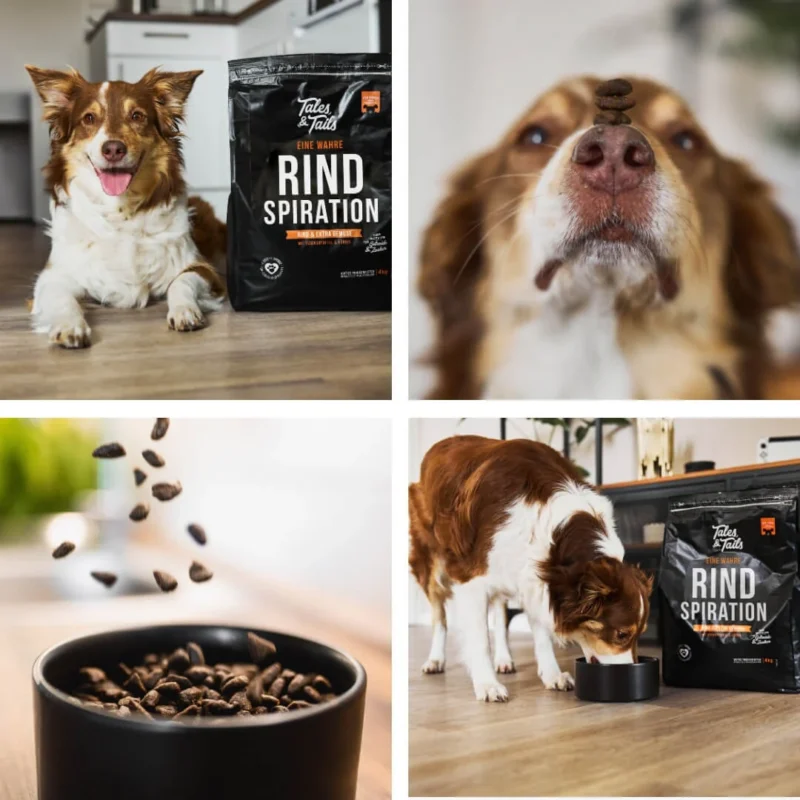
- Tales & Tails with lamb – lamb is the only animal protein source (75% lamb), and the recipe is grain-free.
- Tales & Tails with fish – 60% fish (trout, herring and salmon), with salmon oil as the added oil.
- Tales & Tails from insects – a novel protein source: 53% insects (mealworm and black soldier fly).
- Tales & Tails with horsemeat – horsemeat (58%) is the only animal protein. The product page notes that horsemeat is rare in Estonian dogs’ diets, which makes it a good fit for an elimination diet.
- Velxara with beef – single-protein, with beef fat and salmon oil as its fat sources; the product page says it has no chicken meal or chicken fat.
- Magnum Iberian Pig & Ocean Fish – 40% Iberian pork and 28% sardines, with just seven ingredients in all.
- Magnum Iberian Pig – a cold-pressed single-protein food whose only animal protein source is Iberian pork (68%). On its website, the maker labels its Magnum dry foods “Recommended by veterinarians”.
- Polaris monoprotein canned food with lamb – a wet food made of 70% lamb, 28.7% lamb broth, minerals, cellulose and linseed oil.

Price range: 9,50 € through 85,00 €
Price range: 8,07 € through 72,25 €


Going by the ingredient lists on the product pages, the Tales & Tails lamb recipe has no chicken and no added poultry fat. The insect and horsemeat versions use rapeseed oil, and in the Velxara beef recipe the fat comes from beef fat and salmon oil. The Magnum Iberian pig and ocean fish recipe is made mainly of Iberian pork and sardines, with no added chicken or poultry fat.
Note: if your dog has to avoid not just chicken but every ingredient of poultry origin, check the list even more strictly. Velxara with beef, for example, also contains eggshell membrane.
Here is what our customers say about these foods:
“Our dog is allergic to a great many foods, which brings on watery eyes and scratching. Thanks to this food, that is finally over. … The switch went completely smoothly.”
– Liina, Tales & Tails Soft Dry Food for Dogs with Lamb – Single-Protein
“Our pet is allergic, and for now it seems this choice of food suits them :)”
– Riina, Tales & Tails Dog Food with Horsemeat – Soft Dry Food, Single-Protein
“Even the fussier little eaters love it, and a big plus is that it’s monoprotein!”
– Anu, Polaris Monoprotein Canned Dog Food with Lamb – Complete Food


How do you find out whether chicken really is the problem?
A food allergy is usually identified with an elimination diet. During it, the suspected protein source is taken out of the dog’s diet and you watch whether the symptoms ease. According to the 2015 review mentioned above, the diet should last at least 8 weeks to identify a food allergy in more than 90% of dogs and cats. Then, with your vet’s guidance, the suspected ingredient can be tried again.
A 2017 review in BMC Veterinary Research found that blood tests for food allergy are not reliable in dogs, so an elimination diet followed by trying chicken again is still the way to find out. After chicken goes back in, vets wait 14 days: by then more than 90% of dogs with a skin-related food allergy show signs again.
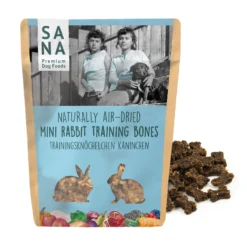
Think about the whole diet. If the main food is chicken-free but the dog still gets chicken treats, chews or supplements with chicken, the results are hard to judge. For treats, you could use Sanadog training treat from rabbit meat, which is made of 95% rabbit meat and 5% vegetable glycerine.
In short
If your dog cannot tolerate chicken, don’t just check whether the word “chicken” is in the name of the food. Check the full ingredient list.
With a very sensitive dog, make sure the food contains no chicken meat, chicken protein, chicken meal or chicken fat.
Also watch for vague names such as poultry fat and animal fat when their origin is not stated.
A food with a simple, transparent ingredient list makes it easier to find a protein source that suits your dog. If the itching, ear problems or digestive upsets are severe or keep coming back, talk to your vet to find the cause. You’ll find single-protein foods in the Monoprotein dog food category – read the full ingredient list there too before you choose.
Sources
- Critically appraised topic on adverse food reactions of companion animals (2): common food allergen sources in dogs and cats – Mueller, Olivry and Prélaud, BMC Veterinary Research, 2016
- Critically appraised topic on adverse food reactions of companion animals (7): signalment and cutaneous manifestations of dogs and cats with adverse food reactions – Olivry and Mueller, BMC Veterinary Research, 2019
- Critically appraised topic on adverse food reactions of companion animals (6): prevalence of noncutaneous manifestations of adverse food reactions in dogs and cats – Mueller and Olivry, BMC Veterinary Research, 2018
- Critically appraised topic on adverse food reactions of companion animals (1): duration of elimination diets – Olivry, Mueller and Prélaud, BMC Veterinary Research, 2015
- Dry Dog Food – Magnum Dog Food (Tenesco s.r.o.), maker’s website
- Critically appraised topic on adverse food reactions of companion animals (4): can we diagnose adverse food reactions in dogs and cats with in vivo or in vitro tests? – Mueller and Olivry, BMC Veterinary Research, 2017
- Critically appraised topic on adverse food reactions of companion animals (9): time to flare of cutaneous signs after a dietary challenge in dogs and cats with food allergies – Olivry and Mueller, BMC Veterinary Research, 2020